Here we are again, Nightwalkers—another Sunday Brew and some movie goodness to sink your teeth into.
Before I throw you into the meat of today’s chat, a little housekeeping. As promised, I’ve been updating the site’s stream of classic public-domain Hollywood romances, and for those of you who love to snuggle up with some old-school charm, this week’s duo is solid, if largely forgotten.
First up, My Dear Secretary (1948), directed by Charles Martin. A late-’40s rom-com starring Laraine Day and a very young Kirk Douglas in one of his first leading roles. Owen Waterbury (Douglas) is a hotshot novelist with an ego the size of his talent and a habit of chasing anything in a skirt. Enter Stephanie Gaylord (Day), an aspiring author who lands a job as his secretary.
She quickly realises this isn’t your standard nine-to-five. Between Owen’s shameless flirting, chaotic work habits, and general self-importance, she’s got her hands full. What starts as frustration turns into sharp, witty back-and-forth, and eventually something softer. Classic screwball territory—big personalities, rapid-fire banter, and romance simmering under all the bickering.
It’s also a fun post-war Hollywood time capsule, poking gentle fun at the myth of the “genius” male writer. Douglas shows surprisingly solid comedic chops, and Day brings intelligence and bite to a role that could’ve been one-note. If you’re into classic rom-coms with attitude and want a glimpse of a screen legend finding his footing, this one’s a charming watch.
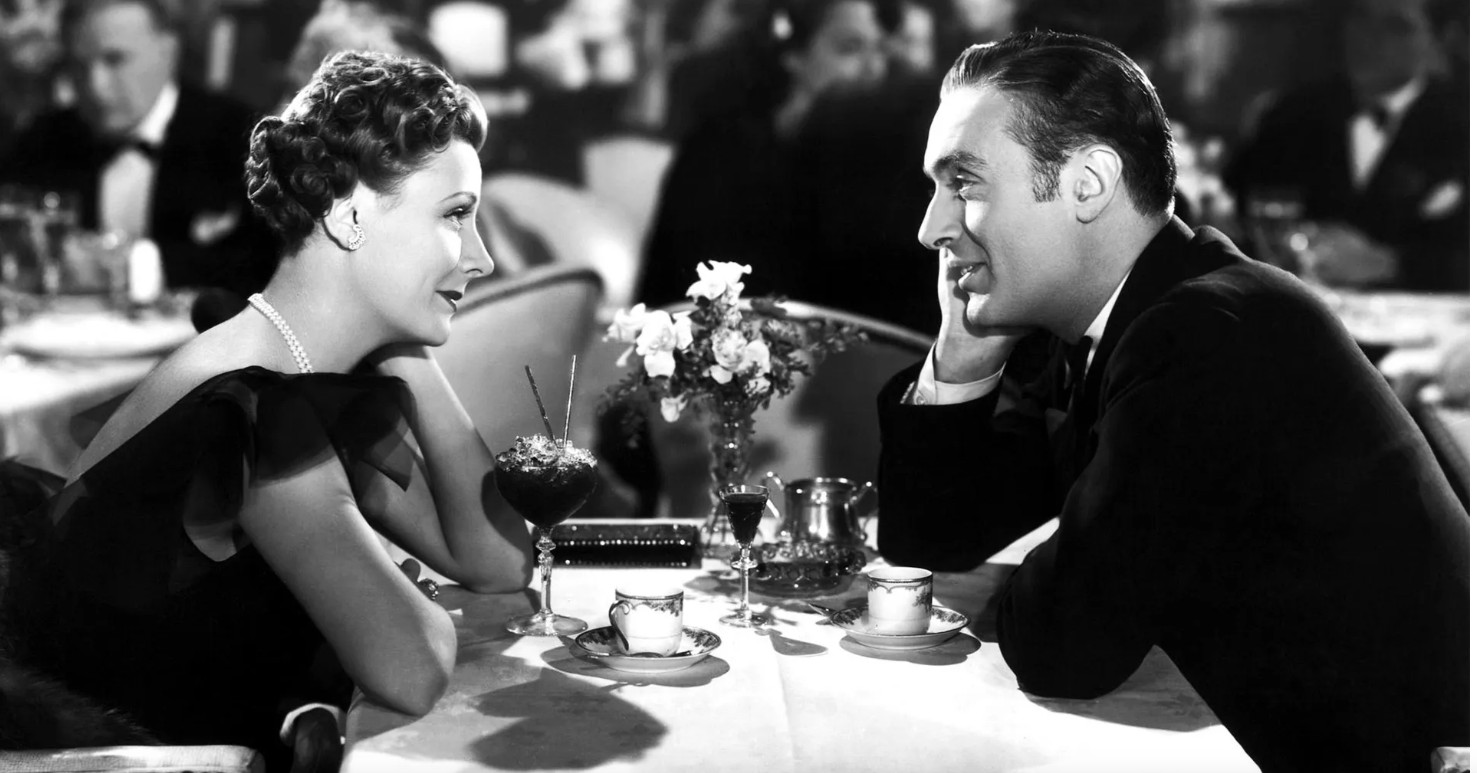
Then there’s Penny Serenade (1941), directed by George Stevens. Peak Golden Age Hollywood, starring Cary Grant and Irene Dunne delivering some of their best work. The story follows Julie (Dunne) as she listens to old records, each song triggering memories of her life with her husband, Roger (Grant). We see the whirlwind romance, the early excitement of marriage, and the grind of adult responsibility.
After a tragic miscarriage, they adopt a baby girl, bringing renewed hope—but life isn’t suddenly fair. The couple is forced to confront grief, uncertainty, and the fragile nature of happiness. Grant steps away from his suave persona and gives a vulnerable, Oscar-nominated performance, while Dunne balances warmth, resilience, and quiet devastation. Stevens keeps the emotion grounded; it leans into melodrama but never loses its humanity. Softies, fair warning—you’ll need tissues.
With under two weeks left of February, there’s more old-timey magic up my sleeve for those who love the classics.
This week, though, we’ve been diving into the anatomy of desire in film, focusing on obsession. To me, obsession is like glue in a story—it drives characters, twists plots, and makes us squirm with fascination. We looked at Wings of Desire (Wim Wenders, 1987), Perfect Blue (Satoshi Kon, 1997), Upstream Color (Shane Carruth, 2013), and wrapped the week with a wildly contrasting pair: Audition (Takashi Miike, 1999) and Inland Empire (David Lynch, 2006).
Each of these films gives us a different lens on desire—what it feels like, how it drives action, and the consequences it brings. Not all are clean-cut; some are complex, layered, and full of questions within questions. As I’ve mentioned on Instagram, I’ll be unpacking Audition and Inland Empire in more detail in my Midweek Musings article on Wednesday. There’s a lot to dig into—the contrasts, the pairings, the nuance—but it’s exactly why I wanted to explore them.
What ties all of these films together is that desire isn’t simple, and neither are the stories trying to capture it. Each one asks something different of us as viewers—sometimes it’s about how far obsession can push someone, sometimes it’s the quiet, almost imperceptible ways attraction twists and turns. Watch them back-to-back, and you start spotting patterns between films, the way tension and longing can live in a glance or a pause rather than a big plot moment.
It’s honestly complicated as fuck and exactly why digging into Audition and Inland Empire is so worth it. There are hidden meanings everywhere, subtle choices, little details that land differently depending on how you watch. These films aren’t just about shocks or thrills—they make you sit with the discomfort, the obsession, the what-ifs. Honestly, it’s the kind of complexity that makes you lean in, squint a bit, and notice things you’d completely miss on the first watch.
Obsession has set the stage, but next week we flip the lens a bit.
We’ll be looking at Healthy Love vs. Cinematic Toxicity, with the anatomy of desire focused on regret.
Here’s the kicker that I want to explore…
Can regret exist in healthy love?
Has it ever really been shown on screen?
More so is the regret framed to follow with accountability, or do our characters learn fuck all in the end?
I won’t be curating films like Before Sunrise (Richard Linklater, 1995), Her (Spike Jonze, 2013), Blue Valentine (Derek Cianfrance, 2010), or Closer (Mike Nichols, 2004) for this flow of picks—they’re just examples of how cinema has explored the messy, lingering stuff under love and desire.
If you’ve seen them, you’ll remember the undertones: quiet, gnawing what-ifs, or the way heartbreak and choices creep into even the tenderest connections. And if you haven’t, consider this a heads-up to maybe have a peek.
The point isn’t to chase clichés or wag fingers at toxic love, but to explore how film can reflect the complicated, layered, and sometimes quietly beautiful—or horrific—ways we experience connection: the mistakes we live with, the choices we wrestle with, the ways desire can give life and make it complicated.
Next week, we’ll unpack all of that: love that nurtures, love that bites, and what regret really looks like when it sits quietly alongside care and affection.
By the way, as I always say and probably sounding like a broken record by now…
I’m not here to play it safe or tick off all the usual tropes. I want to ask the questions that actually matter, even if they don’t have clean answers. That’s the fun bit, Nightwalkers—the chaotic labyrinth of connection, the parts we notice when we stop chasing perfection.
Until next time…
~S

Leave a Reply